
Managing a team with spreadsheets and email threads is like trying to navigate a city with a hand-drawn map from 1995. It might get you where you are going, but it is going to take twice as long, and you are likely to get lost along the way.
If you are still tracking attendance in spreadsheets and approving leave over email threads, you are not just staying lean — you are leaking productivity and risking compliance.
What is an HRMS — Explained Simply?
HRMS stands for Human Resource Management System. In plain terms, it is the digital home for everything related to your employees.
It is a centralised platform that tracks the entire lifecycle of a staff member: from the moment they sign their contract to their daily clock-ins, leave requests, overtime calculations, and final payroll inputs.
Without an HRMS, employee data is scattered across paper forms, group chats, and the hazy memory of managers. With one, your business has a single source of truth.
Why Your Business Needs a Professional System
The danger of manual HR management is not just that it is old school — it is that it is prone to expensive human error.
Imagine an employee asks for a day off via a quick message. The manager says sure while grabbing coffee. At the end of the month, the payroll team — who was not in that conversation — sees no record of the leave. The employee is overpaid, or perhaps underpaid because their attendance was not logged correctly.
Now your HR lead has to spend three hours digging through chat histories and emails to find out what happened. Multiply this by 20, 50, or 100 employees, and your team spends more time fixing errors than growing the business.
A proper HRMS delivers:
- Automatic Accuracy: attendance is captured via biometric or digital logs — no estimated timesheets
- Defined Workflows: leave requests follow a strict approval chain with a permanent paper trail
- Transparency: managers can see who is in the office and who is on leave without asking HR for a report
- Ready-to-Go Payroll: instead of hunting for overtime hours on the 30th of the month, the data is already collated and verified
What to Look for Before You Commit
Not all HR software is created equal. Many systems look great in a demo but fall apart when they meet the real world of shifting schedules and local labour laws.
- Flexible Attendance Rules: can the system handle your specific late-in/early-out policies, grace periods, and overtime thresholds?
- Configurable Leave Management: you should be able to set up different rules for annual, sick, and unpaid leave — including how they accrue over time
- Employee Self-Service: your staff should be able to view their own records and submit requests from their phones — if they have to call HR to check their leave balance, the system is failing you
- Audit Trails: every change to a salary or attendance record must be logged — you need to know exactly who changed what and when
- Shift and Roster Support: if your business uses rotating shifts, the system must handle complex scheduling without breaking the payroll link
Built to Run. Ready to Scale.
At Scriptforge, we believe HR and payroll should not live in two different worlds. That is why we built ForgeTrack.
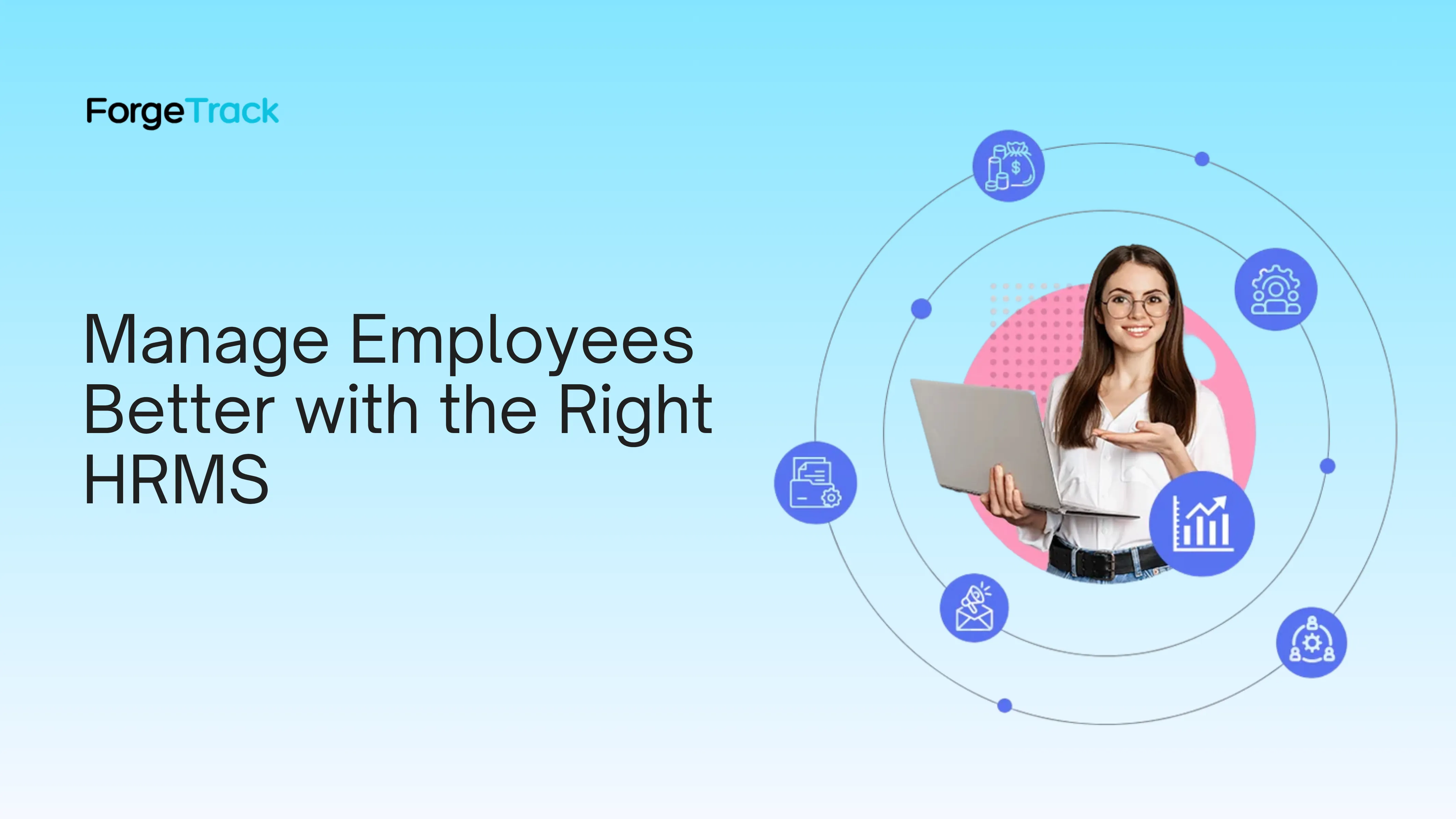
ForgeTrack is a unified HRMS and payroll system built on a modern, API-first foundation. It bridges the gap between people management and financial accuracy, ensuring that every minute worked is a minute properly accounted for.